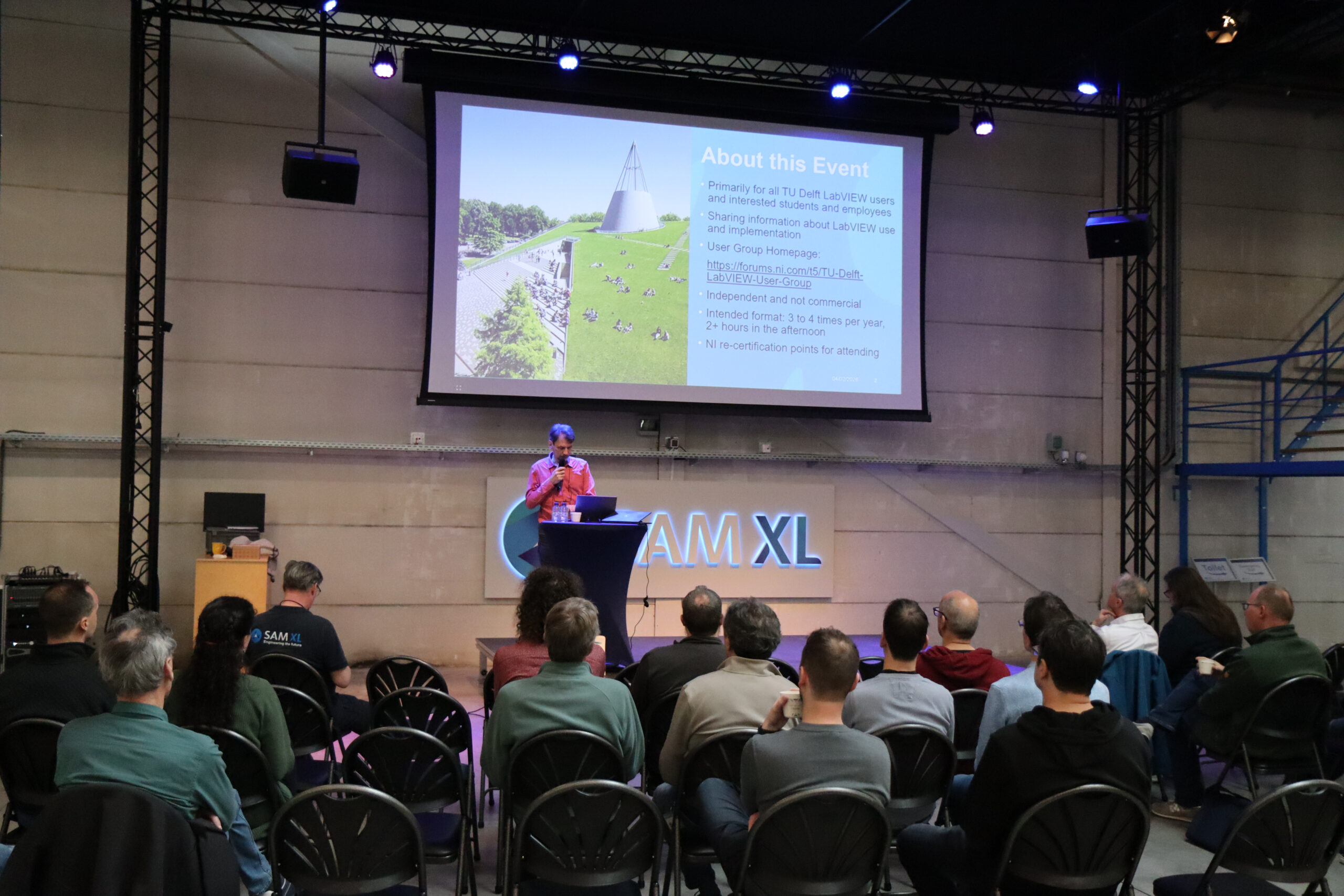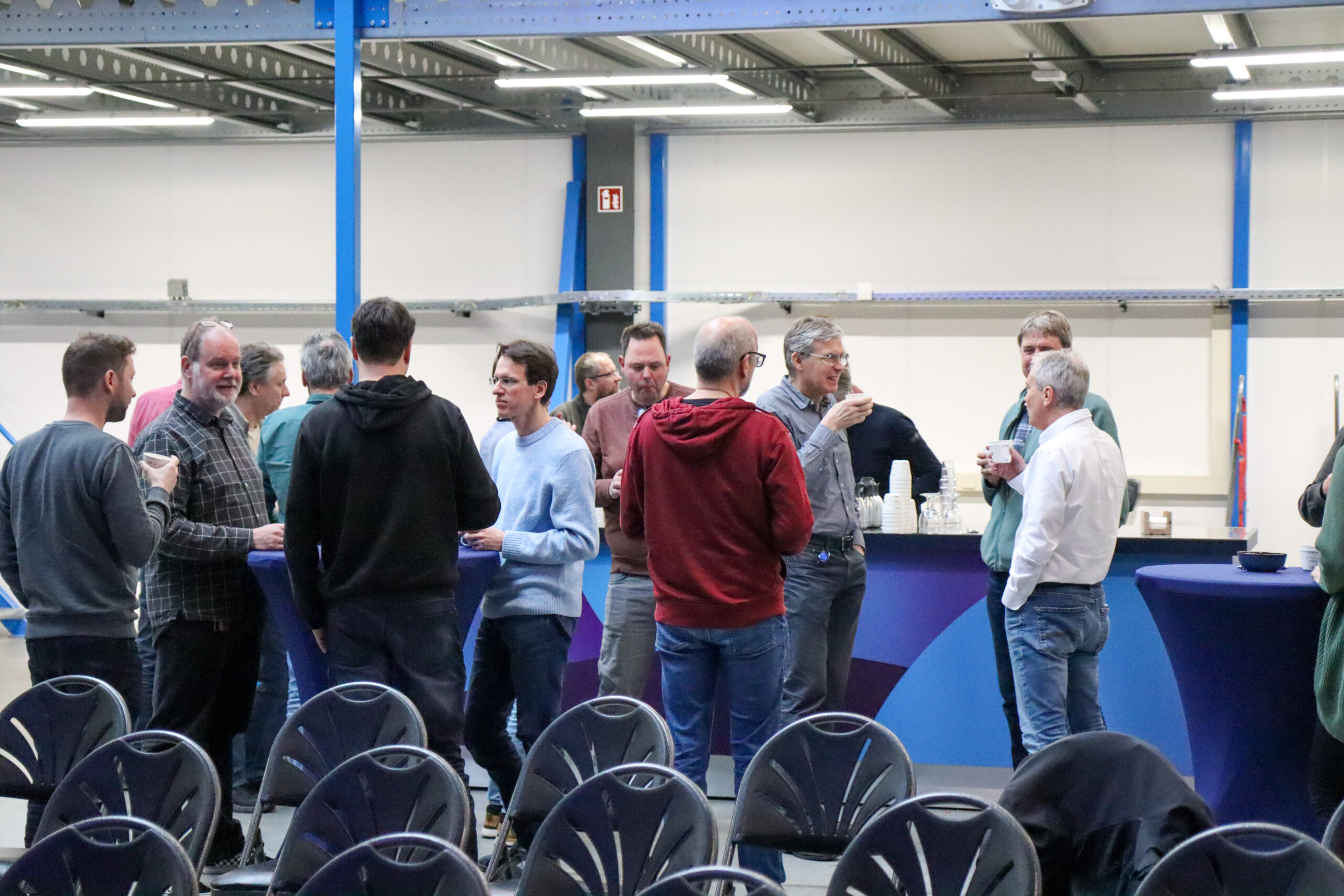
During a LabVIEW user group meeting at SAM XL, Berthil Grashof shared his favourite tips and tricks for development of large applications with LabVIEW. As a System Integrator and Instrumentation Engineer, Berthil has his own reasons for preferring this software above traditional programming languages. In the past years, he has applied his programming skills in several in house designed end effectors.
Berthil Grashof:
“First of all, I like the fact that everything is presented in a graphic way, literally with a drag and drop functionality. So you get a clear and complete overview of the entire process in a short period of time. For me, this works much faster than slogging through traditional programming code. Another major advantage is that the controllers we use are exceptionally more powerful than standard PLCs. And last but not least, when I develop a program, I can make it suitable to the usual flow chart that serves as a starting point. With a special design strategy, the flow chart matches one-to-one with the graphical code and makes certification easy for the aerospace production industry. Because of the object-oriented structure, the code can be reused easily.”
The LabVIEW graphical programming platform is developed by NI (National Instruments), primarily used for data acquisition, instrument control, and industrial automation. It uses visual language that allows engineers and scientists to build applications by dragging and dropping virtual instruments instead of writing lines of code. The LabVIEW user group of users at Delft University of Technology, tech companies located on TU Delft Campus and other industry partners come together several times a year to share knowledge, discuss trends and discover interesting opportunities to collaborate and interact. At SAM XL, we stimulate our engineers to interact with peers on their specialisation. Feel free to contact us if you want to join the LabVIEW user group!