The aviation industry is evolving towards a new generation of more fuel-efficient and low-emission aircraft, with a focus on technologies that support electrification, lightweight design and scalable production. The successors to current models require smarter systems that integrate thermal management, structural efficiency and sustainability throughout the entire life cycle.
Objective
The SURE LEAD project supports this transition. The forward section of a wing is being improved by developing a new method, preventing the formation of ice. In current aircraft, a warm air stream is directed from the engines to the wing. This consumes a great deal of energy. For future aircrafts, a system is being developed that combines electro-thermal heating mats, a bonded metal structure and high-voltage cabling. This integration enables energy-efficient anti-icing, with minimal weight and high-quality materials. These developments present new technical challenges, such as the interaction between electrical systems, adhesives and metallic materials. This calls for new design methods, new test protocols and new validation strategies.
Focus areas
SURE LEAD focuses on several aspects:
- Supporting technologies for alternative propulsion: replacing current systems with electrically powered alternatives supports the integration of electric propulsion systems by reducing reliance on engine-driven pneumatic systems.
- Lightweight structures: the integrated design enables a more compact and efficient wing, contributing to a lower weight.
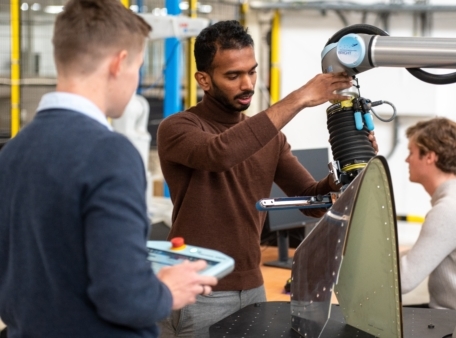
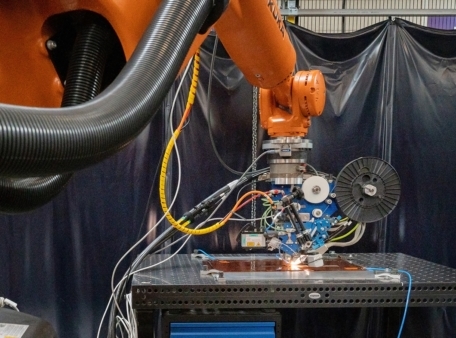
- Manufacturing technologies: the development of advanced automation solutions for the production of the integrated slat (movable front edge of the wing). In addition, we are investigating innovative technologies for maintenance and repair.
- Next-Generation Aircraft: the project aligns with the vision for next-generation aircraft, which, as a result of various innovations, will have a lower environmental impact.
Funding
This project is funded bij the Ministry of Economic Affairs and Climate Policy, within the programme: “TopSector High Tech Vliegtuigmaakindustrie (TSH)”.